

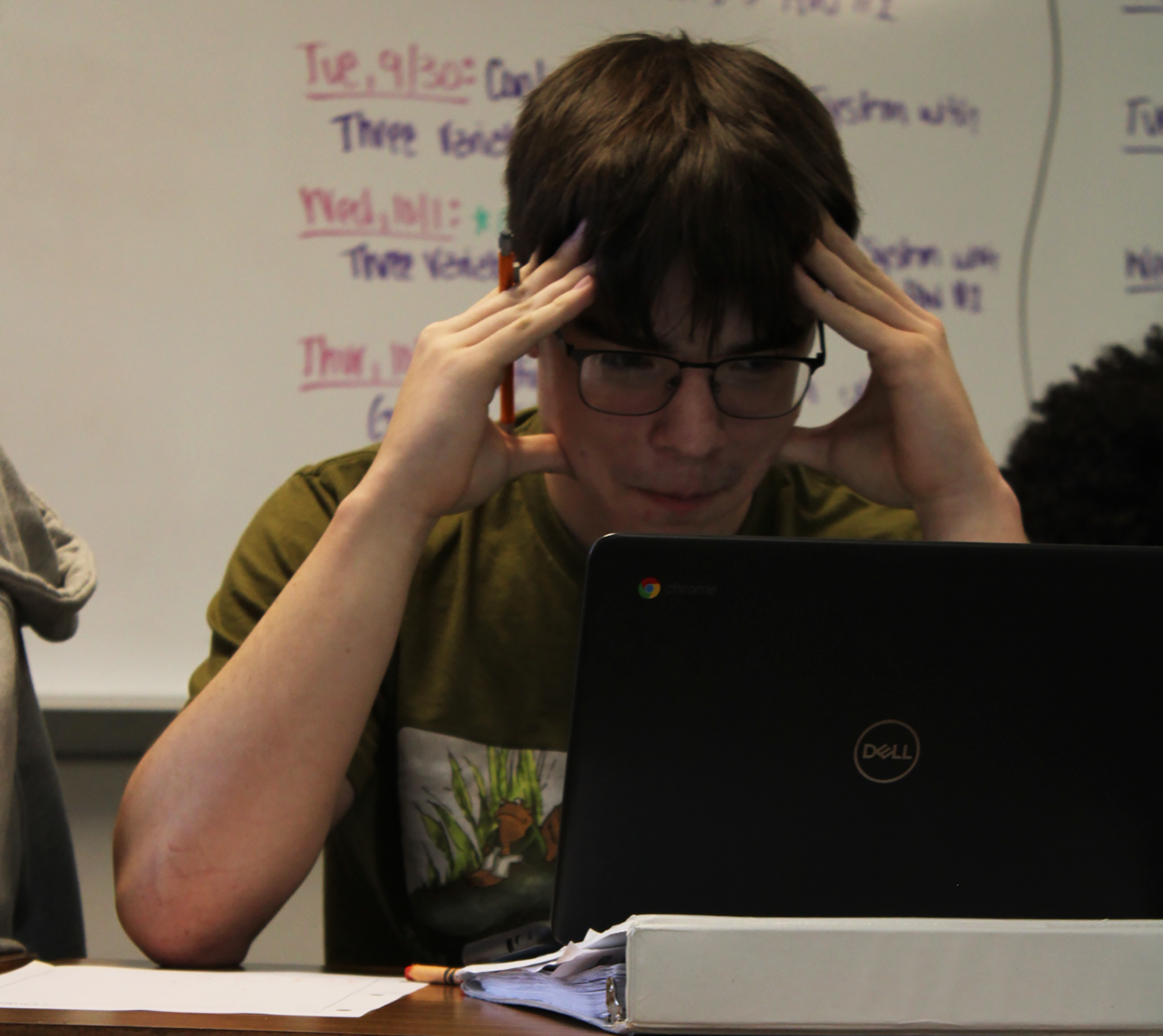
Over the past few years, some math teachers and students have said they noticed an increase in students struggling in math courses because they lack the knowledge they should’ve gained from a prerequisite course.
“I really started struggling in my freshman year,” senior Abigael Evans said. “I feel like I did not have a great baseline due to COVID, and then being thrown into algebra 1, I didn’t know what I was doing. I had a great teacher. He did well, but I wasn’t able to keep up.”
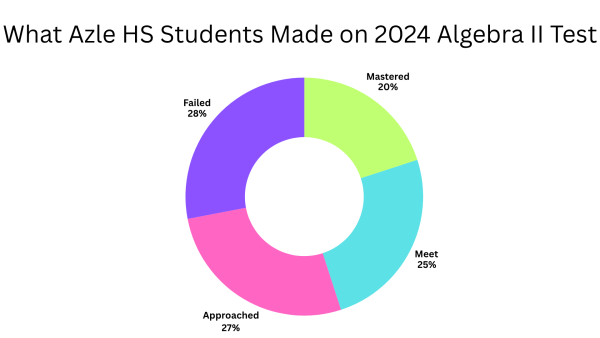
Evans isn’t alone. In 2024, 55% of Azle students failed to meet grade-level standards on the Algebra 1 STAAR test. 28% failed (TEA Data). A passing grade is only 37%, according to the Texas Education Agency’s website. Some teachers, including algebra II and calculus teacher Rachel Bevan, believe the fault lies in students’ dependency on technology and artificial intelligence, and the push for better grades.
“A.I. is not necessarily bad,” Bevan said. “ChatGPT, Gemini and things like that can be extremely helpful if you take the time to learn the information. But, especially over the last few years, students became more and more reliant on it outside of class time. They used it to inflate their grades without truly learning the topics. Especially in algebra II or higher levels, you see more disparity between what they could have done 5, 10, 15 years ago versus now.”
But why do students turn to A.I. in the first place? For some, A.I.’s ability to reword solutions is a helpful tool.
“[A.I.] words the problems way different and easier,” sophomore Lily Spradley said. “So, it made math harder not having it.”
For others like Evans, who had two math teachers in a row go on maternity leave, it felt like they didn’t have anyone else to go to.
“I was lost,” Evans said. “I was extremely lost. I didn’t know what I was hearing, and I didn’t have teachers willing to teach me, so I was kind of left to my own. [A.I.] was my resource because I just simply did not have the resources at school that I needed. So, I resorted to the easiest choice. I regret it, because I didn’t have the chance to build on what I could have learned.”
Bevan believes it’s a push for higher grades that causes some students to cheat.
“If a student can’t get an A on something, almost immediately, they’re going to resort to cheating or trying to find another solution to get that grade that they want or that their parents expect,” Bevan said.
From online videos to out-of-school tutoring, there are many different ways to get extra help.
“[Other resources are] available, ” sophomore Chase Tucker said. “I think if you look [at] your surroundings and the people you know, there’s definitely at least one person that knows math better than you.”
With the no-phone rule limiting students’ access to A.I. and the new grading policy putting more weight on tests, Bevan recommends students try “productive struggle.” In other words, try to learn something, especially if it’s difficult, so you can actually grasp the concept.
“I think that students need to understand that they actually need to understand,” Bevan said. “That it’s not about finishing a single paper and you’ll be fine because your daily average is high. It’s about truly understanding the concept, or your overall grades are going to suffer because your test grades are worth more.”


